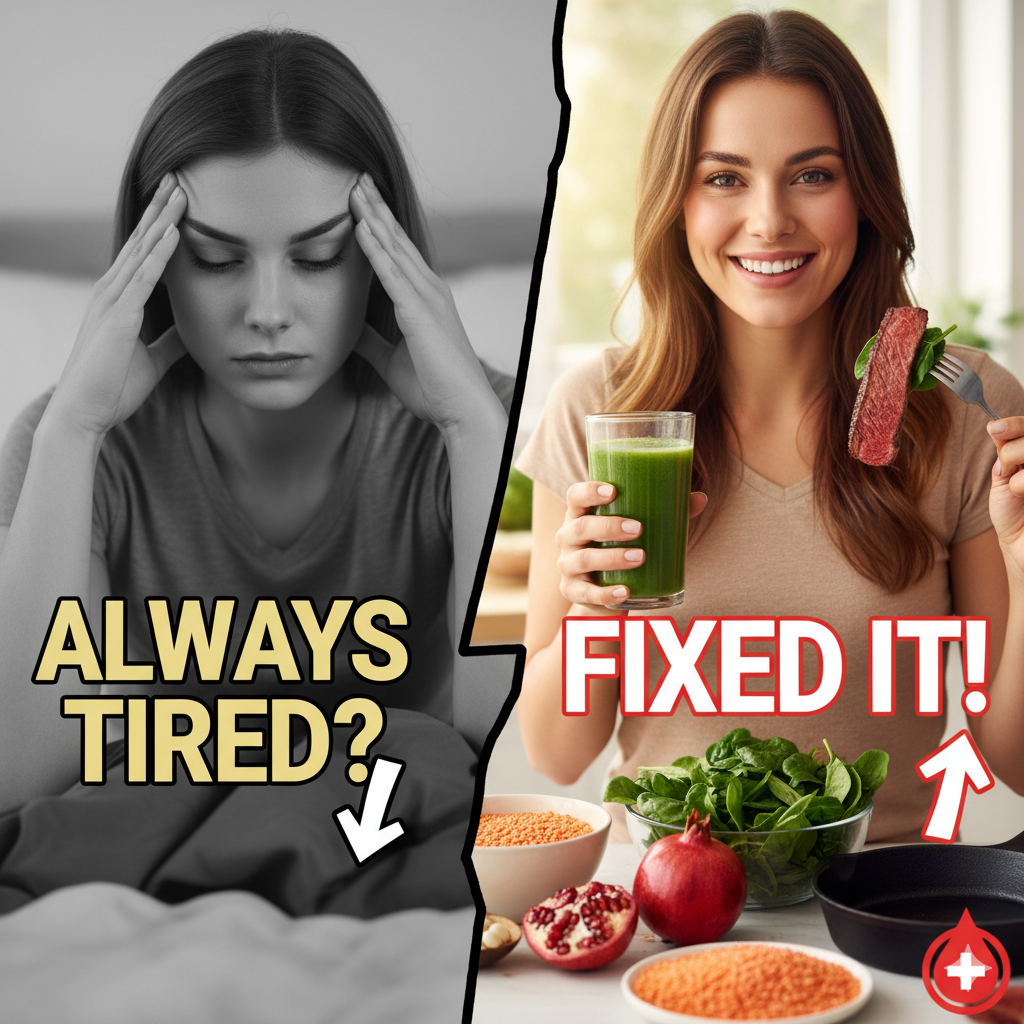
Running on Empty: The Ultimate Guide to Iron Deficiency Anaemia
Let’s face it: we all have days where we feel like we’re dragging our feet through quicksand. A bad night’s sleep or a stressful week at work can knock the wind out of anyone's sails.
But what happens when that exhaustion doesn't go away?
What happens when a full night's rest leaves you feeling just as drained as when you went to bed? If you find yourself battling brain fog, brittle nails, or shortness of breath just walking up a flight of stairs, you might not just be "tired." You might be running on empty.
Iron deficiency anaemia is the most common nutritional deficiency in the world, yet it often goes undiagnosed because we tend to write off the symptoms as a normal part of modern, busy life.
In this deep dive, we’re going to explore exactly what iron deficiency does to your body, the red flags you shouldn't ignore, and the actionable steps you can take to get your spark back.
What Exactly Is Iron Deficiency Anaemia?
To understand the deficiency, we have to look at the engine of your blood: Hemoglobin.
Think of hemoglobin as the delivery trucks inside your red blood cells. Their job is to pick up oxygen from your lungs and transport it to your muscles, tissues, and brain. Iron is the key material your body needs to build these trucks.
When you don’t have enough iron, your body can’t produce enough healthy red blood cells. The result? Your organs and muscles don't get the oxygen they need to function efficiently. It’s literally like trying to drive a car with no gas in the tank.
The Silent Signals: Symptoms to Watch For
Anaemia is often called a "silent" condition because the symptoms creep up slowly. You adapt to feeling 80%, then 60%, then 40%, until you forget what "normal" energy feels like.
Here are the classic signs that your iron stores (Ferritin) might be depleted:
Extreme Fatigue: This isn't just sleepiness; it's a bone-deep exhaustion that affects your ability to concentrate.
Paleness: Look at the inside of your lower eyelid. If it looks pale pink or yellow rather than a vibrant red, you may lack hemoglobin.
Shortness of Breath: Do you feel winded just walking to the mailbox? That’s your body struggling to get oxygen.
Heart Palpitations: Your heart has to beat faster to compensate for the lack of oxygen.
Brittle Nails & Hair Loss: Iron is essential for cell growth; without it, hair thins and nails break.
Restless Legs: A crawling or itchy feeling in your legs at night is a common, yet often overlooked, symptom.
Pica: This is a strange one—some people with severe deficiency develop cravings for non-food items like ice, dirt, or clay.
Why Is This Happening? (The Causes)
If you are iron deficient, the most important question to ask isn't "how do I fix it," but "why is it happening?" You need to plug the leak before you refill the tank.
1. Blood Loss
This is the most common cause. For women of reproductive age, heavy menstrual periods are the number one culprit. However, slow, chronic blood loss from within the body—such as from a peptic ulcer, hiatal hernia, or colon polyp—can also drain your iron stores over time.
2. Dietary Choices
Your body cannot make iron; you must ingest it. If you rely heavily on processed foods, or if you are vegan/vegetarian and not careful about your nutrient intake, you may simply be consuming less iron than you burn.
3. Absorption Issues
Sometimes, you’re eating plenty of iron, but your gut refuses to let it in. Conditions like Celiac disease, Crohn's disease, or even gastric bypass surgery can bypass the part of your small intestine where iron is absorbed.
Note: Frequent use of certain medications, particularly antacids and proton pump inhibitors (PPIs) for acid reflux, can also interfere with iron absorption.
The Action Plan: How to Boost Your Iron Levels
Diagnosing anaemia requires a blood test. Do not self-diagnose. Too much iron (Hemochromatosis) is toxic and dangerous. Once your doctor confirms the deficiency, here is your roadmap to recovery.
1. Know Your Iron Types: Heme vs. Non-Heme
Not all iron is created equal.
Heme Iron: Found in animal products (Beef, chicken liver, clams, oysters, sardines). Your body absorbs this very easily (up to 30% absorption rate).
Non-Heme Iron: Found in plants (Spinach, lentils, fortified cereals, pumpkin seeds, dark chocolate). This is harder for the body to absorb (2-10% absorption rate).
If you are vegetarian, you need to eat significantly more iron-rich food to get the same benefit as a meat-eater.
2. The "Vitamin C" Trick
This is the secret weapon for absorption. Vitamin C captures non-heme iron and stores it in a form that your body can absorb more easily.
The Strategy: Never eat your iron-rich plant foods alone.
Eating Spinach? Squeeze lemon juice over it.
Having Oatmeal? Add strawberries on top.
Taking a supplement? Wash it down with a glass of orange juice, not water.
3. The "Blockers": Coffee and Tea
This is the hardest rule for many. Coffee and tea contain tannins and polyphenols that can inhibit iron absorption by up to 60%.
The Fix: Do not drink tea or coffee with your meals. Enjoy your morning brew, wait at least one hour, and then have your iron-rich breakfast.
4. Supplementation
If your levels are critically low, diet alone won't be fast enough. Your doctor may prescribe high-dose iron. A word of warning: ferrous sulfate (the most common iron pill) can be hard on the stomach, causing constipation or nausea.
Pro Tip: If you struggle with side effects, ask your doctor about "Iron Bisglycinate." It is a chelated form of iron that is generally much gentler on the digestive system.
Frequently Asked Questions (FAQ)
Q: How long does it take to feel better after starting iron? A: While your blood levels make take months to fully recover, most people report feeling "less tired" within 3 to 4 weeks of consistent supplementation.
Q: Can cooking in cast iron skillets help? A: Surprisingly, yes. Cooking acidic foods (like tomato sauce) in a cast-iron skillet can leach small amounts of iron into the food, boosting your intake.
Q: Why is my hair falling out? A: Ferritin (stored iron) is needed for the hair follicle to grow. When the body is low on iron, it prioritizes essential organs (heart, lungs) over non-essential ones (hair), causing shedding.
Conclusion
Iron deficiency anaemia is more than just needing a nap; it’s a systemic issue that robs you of your vitality. The good news is that it is highly treatable.
By understanding the signs, getting the right blood tests, and combining iron-rich foods with Vitamin C, you can refill your tank. Listen to your body—if the exhaustion feels deep and persistent, make that appointment with your doctor today. You deserve to feel energetic again.
Disclaimer: This article is for informational purposes only and does not constitute medical advice. Always consult with a healthcare professional for diagnosis and treatment.